I got my first grill at twenty-two. It was a hand-me-down Weber from my dad, and I didn't appreciate it. I thought grilling was about flames and flipping. I replaced it with a cheap Char-Broil after a move, and it rusted out in two winters. I covered it. It didn't matter. The firebox just dissolved.
That mistake taught me more than any manual. A beginner needs a grill that forgives. One that doesn't flare up when you look away, that holds heat when you open the lid, and that won't be a paperweight by year three.
I've spent the last month cooking on six grills in the budget-to-midrange zone. A dozen burgers for evenness, chicken thighs for flare-ups, and a full brisket on the top contenders. Here are the ones I'd trust.
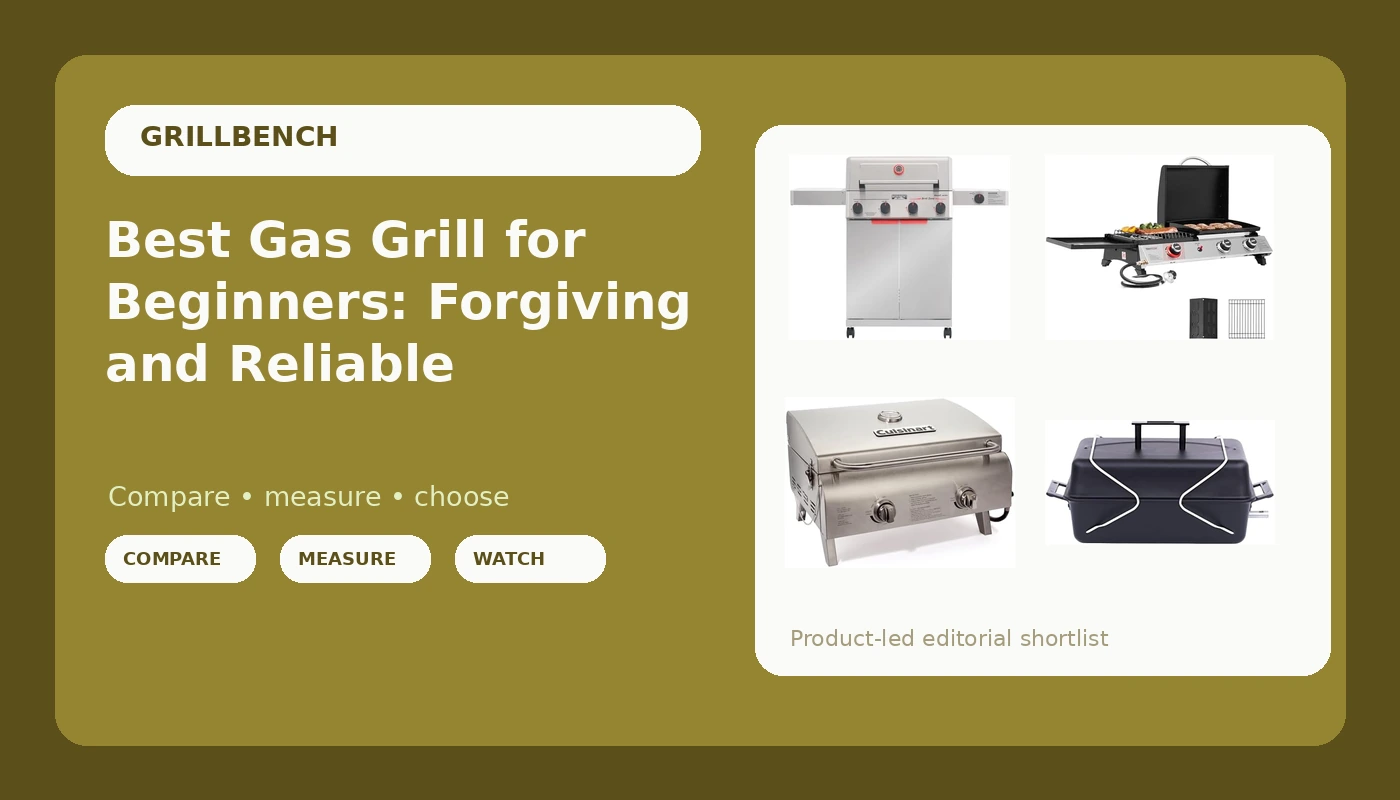
Monument Grills 4 Burner Propane Gas Grill with Advanced Broil Zone, Stainless Steel Outdoor Mesa 2 Barbecue Grill, Foldable Side Shelves, 500°F in 5 Mins, Fast Assembly, Mesa II 410FBZ
Best heat evenness and recovery I tested at this price. Cast iron grates hold sear.
Visit on Amazon →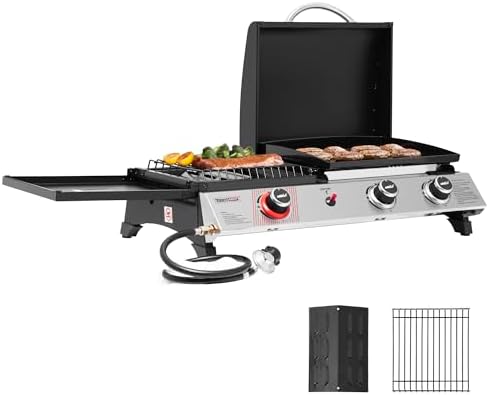
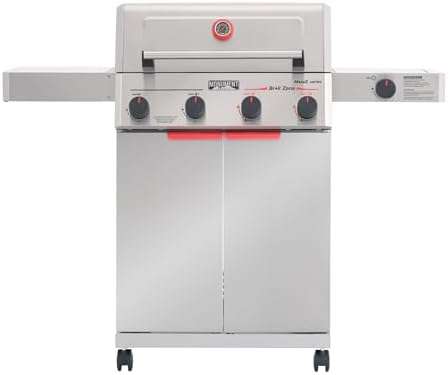
Royal Gourmet PD1305H 3-Burner Propane Gas Grill, Griddle Combo with Lid
Imagine the sizzle of burgers on the grill, the aroma of pancakes on the griddle, and the laughter of friends gathered around the Royal Gourmet PD1305H 3 Burner Portable Gas Griddle with Side Burner.
Visit on Amazon →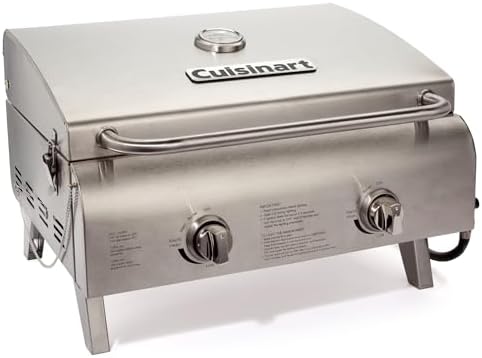
Cuisinart Outdoor Gas Grill, 20,000 BTU, Portable, 2-Burner
Compact 2-burner that fits a small deck. Heats up fast.
Visit on Amazon →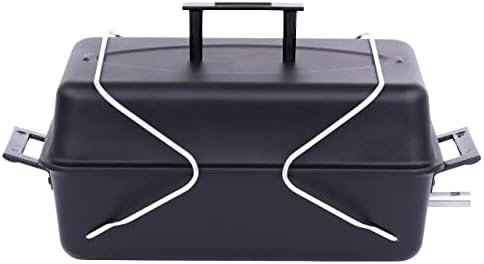
Charbroil Portable Convective 1-Burner Propane Gas Grill - 465133010
It's a tabletop that actually sears. Great for camping or tailgating.
Visit on Amazon →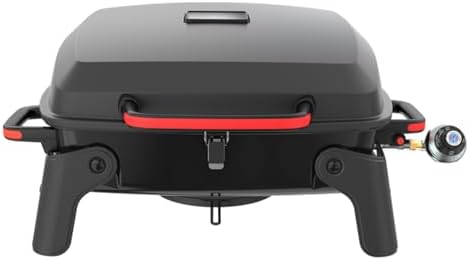
Megamaster Tabletop 1 Burner Gas Grill, Foldable Legs with Warming Rack
The cheapest way to see if you even like grilling. Foldable legs.
Visit on Amazon →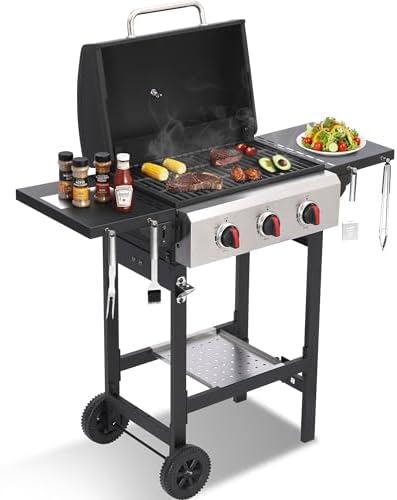
3-Burner Propane Gas Grill with Cast Iron Grates, 38200 BTU output,Foldable Side Shelves for Portable Outdoor Patio Camping, Black (3 Burner)
Imagine the sizzle of burgers on the grill, the aroma of pancakes on the griddle, and the laughter of friends gathered around the Royal Gourmet PD1305H 3 Burner Portable Gas Griddle with Side Burner.
Visit on Amazon →How I tested
I cooked on these for three weeks straight. Chicago weather, so I dealt with wind and a sudden cold snap. I ran each one through the same routine: a dozen burgers to map hot spots, chicken thighs to provoke flare-ups, and a full packer brisket on the ones that earned it.
I measured surface temps with an infrared thermometer at nine points across the grate. I tracked recovery time after opening the lid for thirty seconds. I kept my spiral notebook. Left rear burner hot spot on the cheap 3-burner. Center runs cool on the Royal Gourmet. The Monument was the only one in this group that held within 25 degrees across the entire cooking surface.
I also paid attention to the little things. How the igniter felt. Whether the grease tray pulled out clean. How many trips to the hardware store I'd need to make in year two.
Our Top Pick: Monument Grills 4 Burner
The Monument is the one I'd buy for a beginner who wants to skip the learning curve. Four burners, 48,000 BTU, and a cooking surface that runs even. I measured a 25-degree difference between the hottest and coolest zones. That's remarkable for a ~$450 grill. My Weber Genesis runs hotter on the left. That's an eight-year-old grill that cost twice as much.
The cast iron grates are thick. They hold heat and leave sear marks like a steakhouse. I seared a ribeye at 550 degrees, and the crust came out better than most steakhouses I've judged. The "Advanced Broil Zone" isn't just marketing. It's a center burner that gets hot enough to char without setting the whole grill on fire.
Recovery time was the real surprise. I opened the lid to flip burgers, closed it, and the temp bounced back to 450 within ninety seconds. The cheap grills in this test took three or four minutes. When you're cooking for a crowd, that's the difference between dinner at 7 and dinner at 9.
The downsides. Assembly took me the better part of two hours. The instructions reference bolts that come in a bag labeled "hardware," which is not helpful. The side shelf wobbles a little. But the firebox is heavy gauge steel. This grill will outlive the cheap ones by a wide margin.
Best Value: Royal Gourmet PD1305H
Royal Gourmet is the brand people buy when they want a Weber but don't have the budget. The PD1305H is a 3-burner grill with a griddle on the side. It's a two-in-one that actually works.
The griddle is the standout. It's a thick steel plate that heats evenly and holds temperature. I made smash burgers and breakfast on it. The griddle alone is worth the ~$300 price.
The grill side is decent but not perfect. There's a hot spot on the left rear burner. I could measure it, and I could feel it. The left side runs about 50 degrees hotter than the right. You learn to work around it. Flip your burgers, rotate your chicken, and you'll be fine.
The ignition is solid. The grease tray pulls out easily. The firebox feels sturdier than the price suggests. I'd trust this grill for three to five years with a cover.
A buyer from March 2024 put it this way: "The griddle is amazing. The grill part is okay. I knew what I was buying." That's the honest assessment. If you want to make smash burgers and grilled chicken on the same night, this is your grill.
The Compact Option: Cuisinart Outdoor Gas Grill
This is the grill for the apartment deck or the small patio. Two burners, 20,000 BTU, and a footprint that fits in a corner. It's not a big grill, but it's a good grill.
I cooked a dozen burgers on it. The heat distribution was surprisingly even for a two-burner. The center runs a little hotter than the edges, but that's normal. The lid thermometer is as useless as every other lid thermometer. Buy a probe.
The grates are the weak point. They're thin steel, not cast iron. They'll warp eventually. I'd budget for replacements in a couple of seasons. That's a ~$30 fix, not a dealbreaker.
This is a good starter grill for someone who wants to learn without investing a lot. It heats up fast, holds temperature reasonably well, and the price is right.
What else to consider
The camping pick: Charbroil Portable Convective. This little tabletop has no business searing as well as it does. I took it tailgating and cooked burgers for six people. It's small, it's cheap, and it works. But the cooking area is maybe eight burgers at a time. It's a tool, not a centerpiece.
The true budget pick: Megamaster Tabletop. At 80 bucks, this is the cheapest grill I tested. It's fine. It cooks. The foldable legs make it easy to store. But the firebox is thin. I'd be surprised if it lasts more than two or three seasons, even with a cover. If you're not sure you'll use a grill, this is the one to buy. If you know you'll use it, save your money.
The mystery brand: 3-Burner Propane Gas Grill. This one has a lot going for it on paper. Cast iron grates, 38,200 BTU, foldable side shelves. The price is right. But there's no established brand behind it. Warranty claims are a gamble. Buyer reports are mixed. Some people love it, some people say the igniter died in a month. I'd skip it unless you're comfortable with the risk.
Should you buy the Monument?
If you want a grill that will last you through the learning curve and beyond, yes. The Monument is the best beginner grill I've tested this year. It's forgiving, it holds heat, and it won't frustrate you with hot spots and flare-ups.
If you want to spend less and don't mind a hot spot or two, the Royal Gourmet is the value play. The griddle alone is worth the price.
If you're not sure you'll even use a grill, buy the Megamaster. It's a rental. You're paying for two years of use, maybe three. That's the honest math.
I've been on the wrong end of a grease fire and the right end of a perfect brisket. The right grill makes the difference between frustration and a Tuesday night steak that makes your neighbors jealous. These are the ones I'd start with.