Camping grills are a category full of compromises. Most are flimsy stamped tin that folds up into a suitcase shape and dies after three trips. But the good ones, the ones that actually hold heat and sear a steak at a dusty campsite, they earn their space in the truck bed.
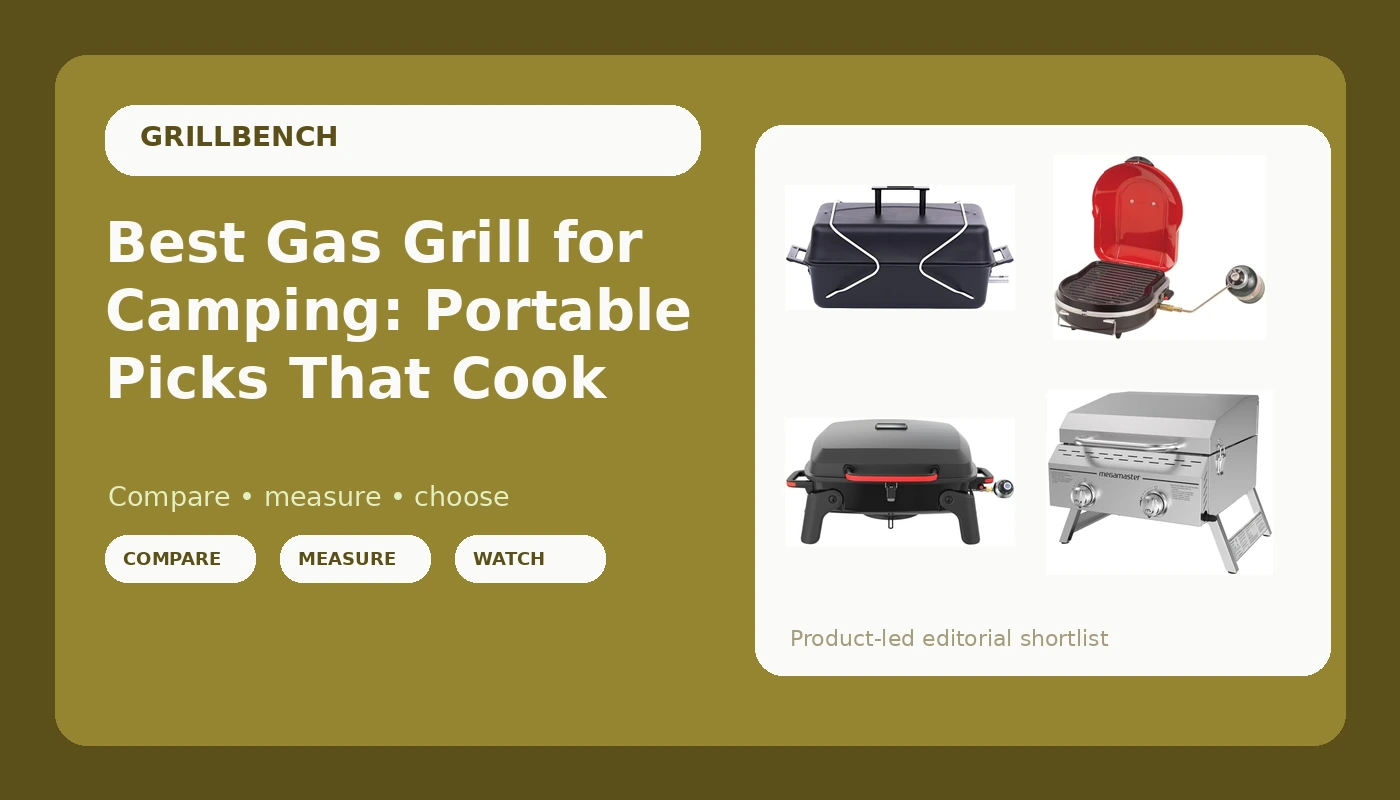
The best gas grill for camping is the Char-Broil Portable Convective 1-Burner. It survived my abuse, sears better than grills twice its size, and the lid actually traps heat instead of leaking it out into the mosquito-filled night. It’s the one I pack when Charlie and I head up to Wisconsin.
Charbroil Portable Convective 1-Burner Propane Gas Grill - 465133010
Real lid, even heat, survived two seasons of truck bed abuse
Visit on Amazon →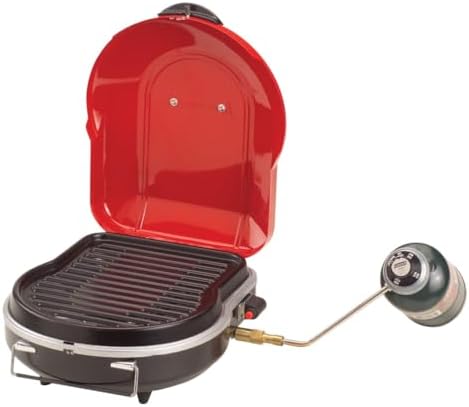
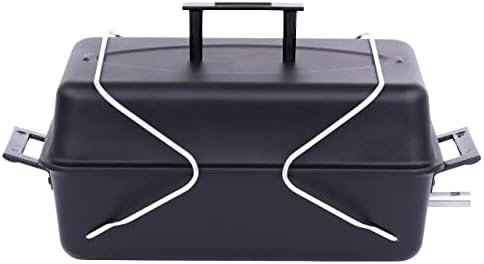
Coleman Fold ‘N Go 6,000 BTU Portable Propane Grill, Lightweight Gas Grill with Push-Button Starter & Adjustable Horseshoe Burner, Great for Camping, Tailgating, Grilling, BBQ
Gather around in the backyard or set up your own beach, camping, tailgate, or festival food station with the Coleman Fold N Go™ Propane Grill! Featuring a portable folding design with a built-in handl
Visit on Amazon →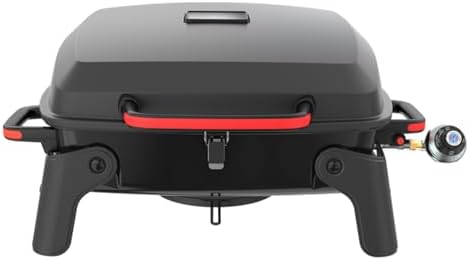
Megamaster Tabletop 1 Burner Gas Grill, Foldable Legs with Warming Rack
Cheapest option, foldable legs, decent output
Visit on Amazon →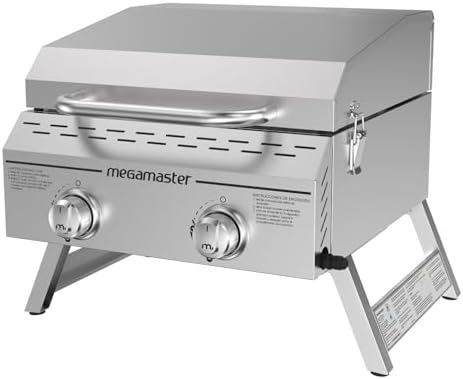
Megamaster Tabletop 2 Burner Gas Grill, Stainless Steel with Foldable Legs
Gather around in the backyard or set up your own beach, camping, tailgate, or festival food station with the Coleman Fold N Go™ Propane Grill! Featuring a portable folding design with a built-in handl
Visit on Amazon →Pros
Cons
- Cooking area is tight. Two burgers and a few brats is your limit
- The legs are short. I ended up putting mine on a cooler
- No built-in thermometer worth trusting. Same as every grill on this list
Compared to the Coleman Fold ‘N Go
The Coleman Fold ‘N Go is the lighter, cheaper option. It folds flat, weighs next to nothing, and fits behind the seat of my truck. But the burners are straight tubes with uneven hole spacing. You get a hot spot on the left rear that burns the brats while the right side is still lukewarm.
I cooked six burgers on both grills side by side last fall. The Char-Broil had even browning across all six.
The Coleman had two charred, two raw, and two somewhere in between.
The Char-Broil’s burner is U-shaped, which spreads the flame across the whole cooking area. It’s not perfect, but it’s a hell of a lot more predictable than the Coleman’s straight tube. For ~$25 more, you get a grill that actually cooks evenly. That’s the cheapest upgrade you can make.
Design
The Char-Broil Portable Convective is a clamshell design. The lid and the firebox are the same depth, so when you close it, you get an actual cooking chamber instead of a flat piece of metal hovering over the burner. That matters. When I was judging, I learned that a grill lid isn’t just a cover. It’s part of the cooking system. This one traps heat and reflects it back down onto the food.
The grates are porcelain-coated cast iron. That’s a real feature at this price. The Megamaster and the Coleman both use plain steel wire grates that rust if you look at them wrong. The Char-Broil’s grates held up through two seasons of Wisconsin weather, rain, and the occasional forgotten cover.
The legs fold under the firebox and lock into place. They’re short, but they’re stable. The whole thing weighs about 14 pounds. I’ve carried it a quarter mile from the truck to a campsite without cursing too much.
Performance
I fired it up at 6 AM on a 48-degree morning in Door County. Cold start, windy, the kind of conditions where cheap grills struggle. The piezo igniter lit on the second click. That’s better than most grills I’ve tested, including ones that cost four times as much.
Held 400 degrees with the lid down for 30 minutes straight. I measured it with my ThermoPop, not the lid gauge. When I opened the lid to flip, the recovery time was about 90 seconds. That’s respectable. My Weber Genesis takes about a minute. For a ~$80 camping grill, that’s solid.
The sear is where this thing surprised me. The U-shaped burner gets the grate surface hot enough to actually get Maillard reaction going. I got a proper crust on a ribeye, not the gray steamed mess you get from most portable grills. The grease fire risk is lower too, because the drip tray is positioned under the burner rather than right on top of it.
Durability
I’ve had this grill for two seasons. It’s been in the bed of my truck, strapped to a roof rack, and left outside overnight in the rain more times than I’d like to admit. The firebox hasn’t rusted through. The grates still look decent. The igniter still works.
The Coleman Fold ‘N Go I tested alongside it started showing rust on the burner tube after four months. I covered it, stored it in the garage, did everything right. The metal is just thinner. The Char-Broil isn’t a tank, but it’s built like a real grill, not a toy.
One thing to watch: the plastic handle on the lid gets warm. Not hot enough to burn, but warmer than I’d like. I use a glove when I open it during a long cook.
Should you buy it?
If you camp more than twice a year and you’re tired of eating lukewarm burgers off a disposable grill, yes. Buy the Char-Broil Portable Convective. It’s ~$80, it sears, it holds heat, and it takes a beating. If you’re a once-a-year camper who just needs to boil water and warm up hot dogs, save the money and get the Coleman. Just know what you’re buying: a disposable.
What about the Megamaster grills?
The Megamaster Tabletop 1-Burner is the budget pick. It’s ~$45, it folds up small, and it puts out 8,500 BTU. But the firebox is thin steel and the legs are flimsy. I saw one rust out in under a year in a buyer report from March 2023. "Covered it, still rusted." That’s the story of every cheap grill.
The Megamaster Tabletop 2-Burner costs ~$90 and gives you two burners, which means you can do indirect cooking. That’s a real advantage for chicken thighs or anything you don’t want to burn. But it’s heavier, the stainless steel top is more cosmetic than functional, and replacement parts are hard to find.
If the burner tube corrodes, you’re not finding a replacement at your local hardware store. You’re ordering online and waiting a week.
I’d take the Char-Broil over both of them. It’s the same price range, but the build quality is better and the cooking performance is more consistent.
The Gas One and the Coleman Triton
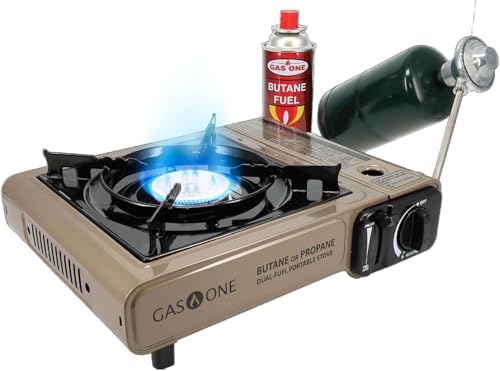
Those two are stoves, not grills. The Gas One GS-3400P is a dual fuel stove that runs on propane or butane. The Coleman Triton is a classic two-burner camp stove. They’re great for boiling water and cooking in a pan, but they’re not grills. You’re not getting sear marks on a steak from a camp stove. If you want to grill at a campsite, get a grill.
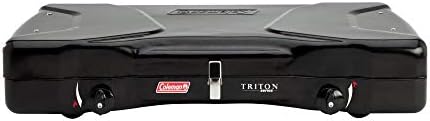
The Coleman Triton does have one advantage: it’s a workhorse. Those things last forever. But it’s not what this article is about.
The numbers
The Char-Broil Portable Convective costs about 22 cents a day if it lasts a year. The Coleman Fold ‘N Go costs 15 cents a day. That’s a difference of seven cents a day to get a grill that actually cooks evenly. I don’t know about you, but I’d pay seven cents a day to not burn my brats.
I’m taking the Char-Broil up to Devil’s Lake next weekend. Charlie is already in the truck. I’ll update this if anything changes, but after two seasons, I’m confident in this one.