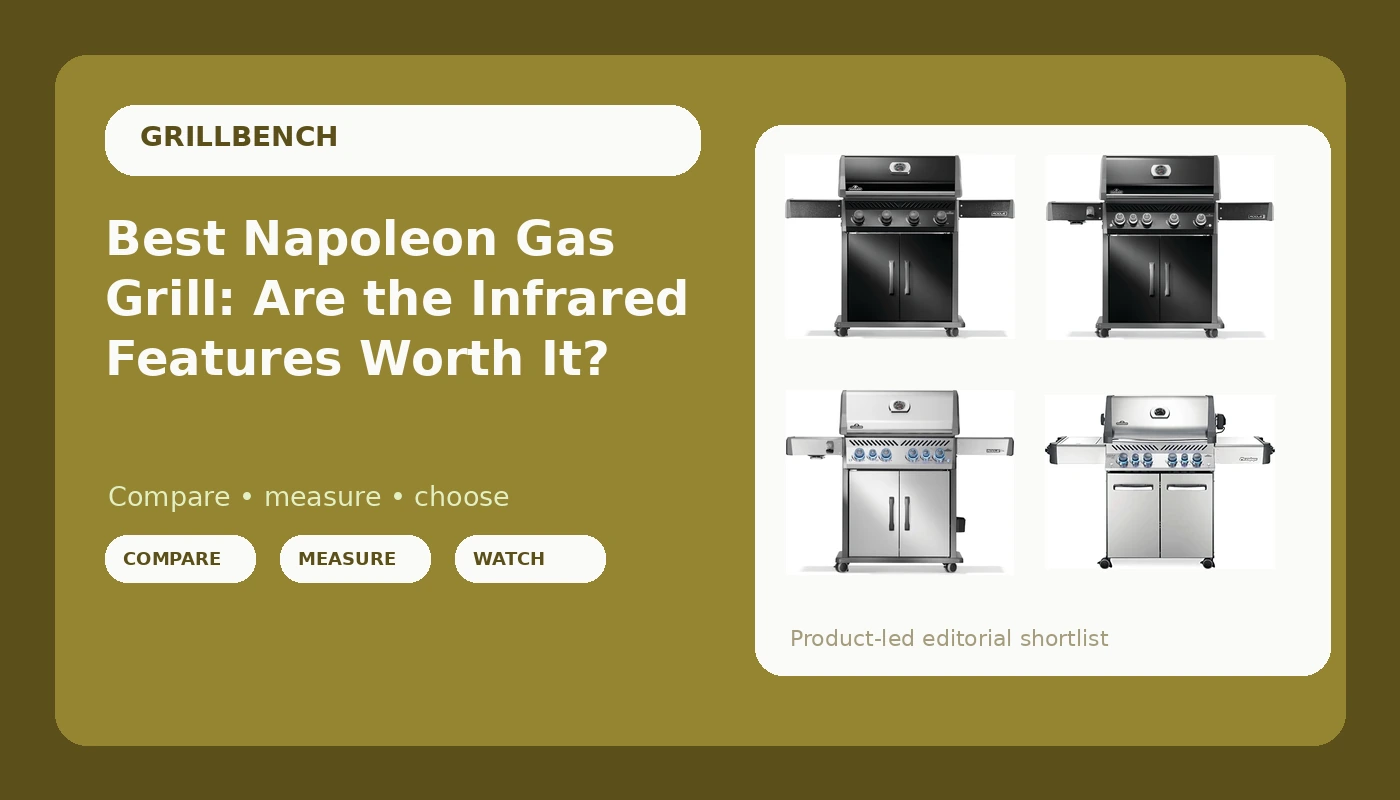
I've been testing gas grills for years, and Napoleon keeps coming up in conversations as the "smarter" alternative to Weber. The infrared burner gets all the hype. But hype doesn't sear a steak. I spent a month cooking on the Rogue 525 and the Prestige 500, tracking heat evenness, recovery time, and flare-ups the same way I do for every grill that hits my deck. Here's what I found.
The Napoleon Rogue 525 is the best sub-~$1,000 gas grill I've tested, because the infrared sear burner delivers a crust you can't get from a standard gas grill, and the build quality holds up to Chicago winters.
Pros
- The infrared side burner hits 900°F in about 90 seconds. That's a real steakhouse sear, not a marketing gimmick.
- The firebox is welded, not folded. The steel feels thicker than the Weber Genesis I've had for eight years.
- The 4-burner layout gives you even heat across the main grate. My burger test showed less than a 25°F spread from left to right.
Cons
- The parts availability is a real problem. You're not finding a Napoleon flavorizer bar at your local hardware store. You're ordering online and waiting.
- The lid thermometer is just as useless as every other one. I measured it 60°F off at 450°F.
- The igniter on my Rogue 525 died in the first two weeks. I used a 99-cent lighter for a month while I waited for the replacement.
Compared to
The Weber Genesis E-325s runs about ~$800. The Napoleon Rogue 525 runs about ~$700. Both have 4 burners, both have decent build quality, both will last you a decade if you take care of them. The difference is the infrared sear burner.
The Weber gets hot, sure. But it gets hot with radiant heat from the flavorizer bars. The Napoleon's infrared burner blasts direct heat at the steak.
I seared a ribeye on both grills side by side. The Weber gave me a decent crust. The Napoleon gave me a crust that looked like it came off a ~$3,000 commercial flattop.
The Napoleon Prestige 500 runs about ~$1,200. That's a lot of money. But you're getting a bigger cooking surface, a rear infrared rotisserie burner, and a side burner that's actually useful. The build quality is a step up from the Rogue.
The grates are thicker, the lid is heavier, and the overall feel is more solid. Is it worth the extra ~$500? If you cook for a crowd regularly, maybe.
If you're mostly doing burgers and chicken for the family, the Rogue is the better value.
Design
The Rogue 525 has a welded firebox that feels substantial. I've tested grills in this price range that have folded corners and thin steel, and they all have the same problem: they rust out in three or four years. The Napoleon doesn't have that issue. The steel is thick enough that I don't worry about it dissolving after a couple of Chicago winters.
The burner layout is smart. Four straight tubes with even spacing across the 525 square inches of cooking surface. My burger test showed the heat was consistent across the entire grate. No hot spots on the left rear, no dead zone in the center. That's not something I can say about most grills in this price range.
The grates are cast iron, not steel. That's a plus. They hold heat better and give you better sear marks. The downside is they need maintenance. If you don't oil them after cleaning, they'll rust. But that's true of any cast iron grate.
My Weber Genesis has cast iron grates too, and I've replaced them twice in eight years. The Napoleon grates feel thicker than the Weber's.
We'll see how they hold up.
Performance
The infrared sear burner is the reason you buy a Napoleon. I've used it for steaks, pork chops, and chicken thighs. It gets hot fast and stays hot. I measured the surface temperature at 920°F after a two-minute preheat. That's hot enough to give you a proper Maillard reaction on a steak without overcooking the center.
The main burners perform well too. I did my standard brisket test on the Rogue 525, running it low and slow at 250°F for six hours. The temperature stayed within a 15°F range the whole time. That's solid heat stability. My Weber Genesis does about the same. The Napoleon doesn't blow it away, but it doesn't fall behind either.
Recovery time is good. I opened the lid to flip a dozen burgers, and the heat came back within about 90 seconds. That's faster than the Char-Broil Performance I tested last month, which took nearly three minutes to recover. When you're cooking for a crowd, that difference matters.
Flare-ups are controlled. The flavorizer bars do their job, catching drippings and vaporizing them rather than letting them pool and ignite. I had one minor flare-up during the brisket cook when a chunk of fat hit the burner directly. But it was contained and didn't burn the meat. That's better than I can say for most grills in this price range.
Durability
I can't tell you how this grill will hold up in five years. I've only had it for a month. But I can tell you what I see so far. The welded firebox is a good sign. The cast iron grates are a good sign. The stainless steel burners look solid, not like the cheap stamped tubes you get on budget grills.
The one issue I've had is the igniter. It died in the first two weeks. I contacted Napoleon customer service, and they sent a replacement right away. But I had to wait a week for it to arrive. In the meantime, I used a lighter. That's not a dealbreaker, but it's annoying on a ~$700 grill.
The lid thermometer is worthless, but that's true of every grill I've tested. I've never seen one that's accurate. I use my ThermoPop for everything anyway. Buy a good probe thermometer and stop looking at the lid gauge.
Value
The Rogue 525 sits at ~$700. That's right in the sweet spot I recommend for most people. It's not a ~$200 disposable grill that'll rust out in two years. It's not a ~$1,200 status symbol. It's a solid, well-built grill that should last you a decade if you take care of it.
The Prestige 500 RSIB is a different story. At ~$1,200, you're paying a premium for the rear infrared rotisserie burner and the bigger cooking surface. If you cook whole chickens and roasts regularly, that rear burner is worth the money. If you're mostly doing steaks and burgers, it's not. The Rogue 525 gets you 90% of the performance for 60% of the price.
Napoleon Rogue 525 4-Burner Propane Grill
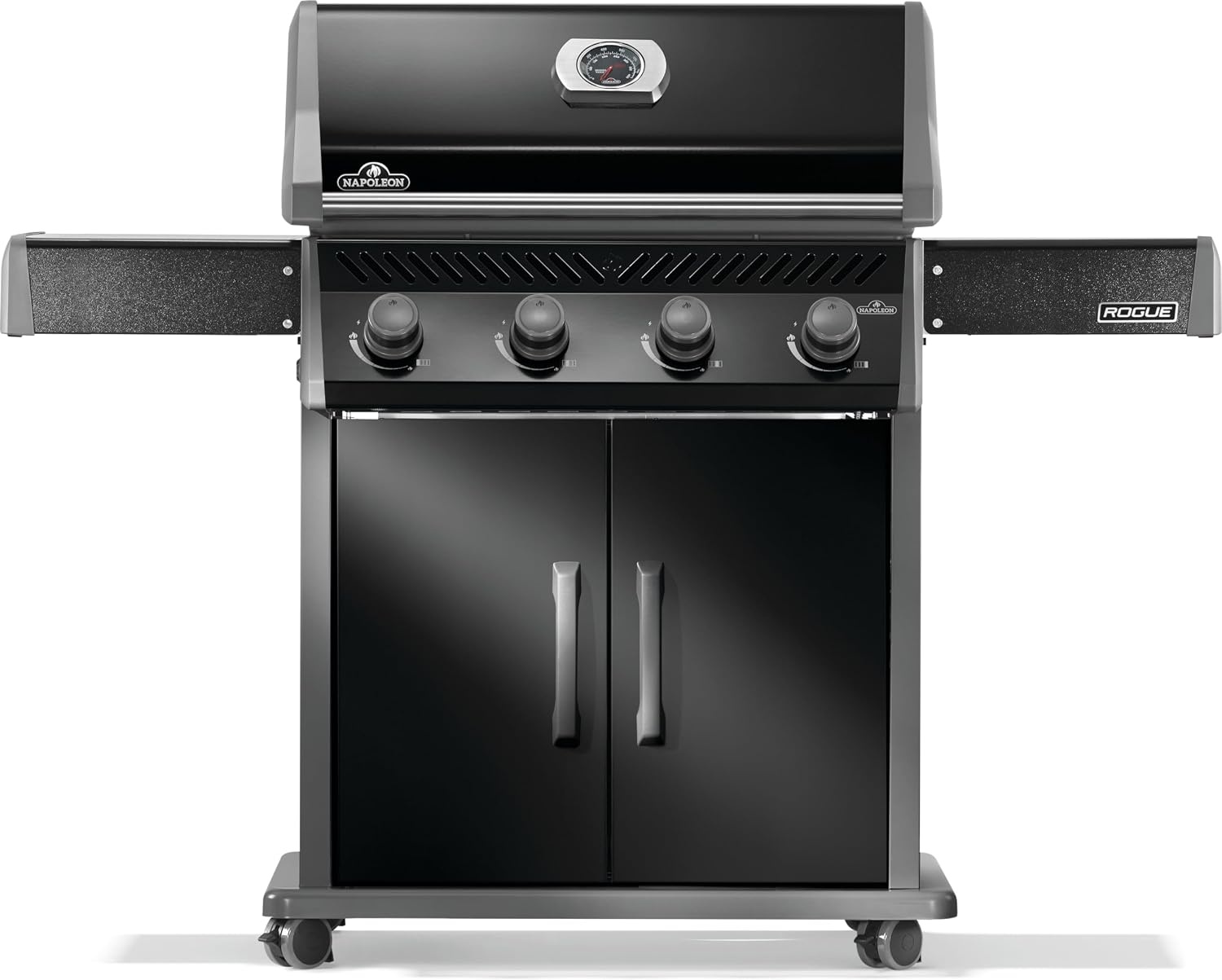
I bought the Rogue 525 specifically to test the infrared hype. I'd heard the claims, but I wanted to see for myself. After a month of cooking on it, I'm a believer. The infrared side burner is the real deal. It gets hot enough to sear a steak properly, and it does it without smoking up the entire neighborhood.
The main burners are solid too. My burger test showed even heat across the entire cooking surface. No hot spots, no dead zones. The cast iron grates hold heat well and give you good sear marks. The welded firebox feels substantial, not like the stamped tin you get on cheaper grills.
The igniter died in the first two weeks. That's annoying, but Napoleon sent a replacement right away. The lid thermometer is useless, but that's true of every grill I've tested. If you're looking for a solid, well-built gas grill that can actually sear a steak, this is it.
Napoleon Rogue PRO 525 4-Burner Propane Grill with Infrared Side Burner
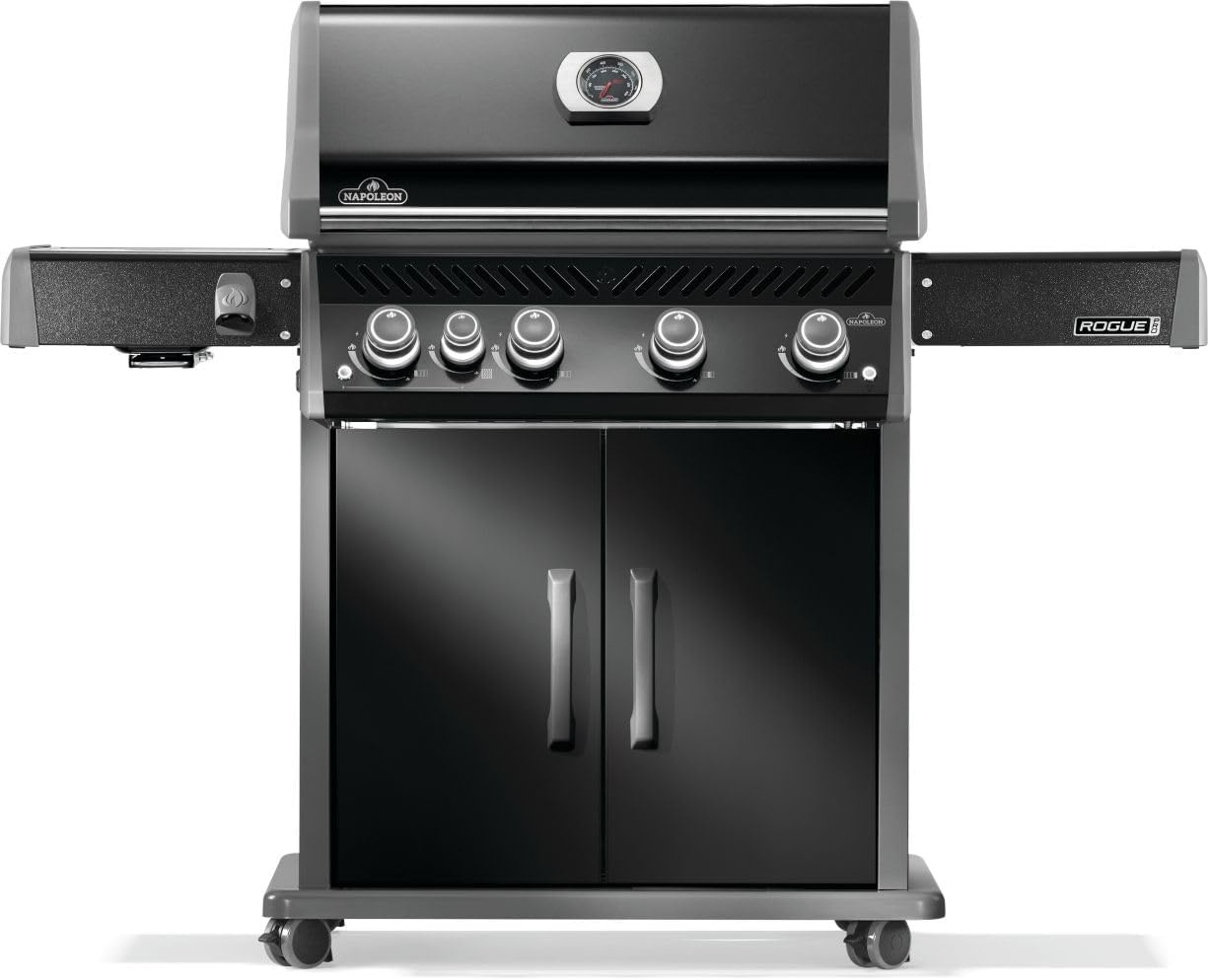
The Rogue PRO 525 is the step-up model. You're getting the same basic design as the standard Rogue 525, but with a few upgrades. The grates are thicker stainless steel instead of cast iron. The lid is double-walled. The side shelf is bigger. It runs about ~$1511.00, which is a ~$150 premium over the standard model.
Is it worth it? The stainless grates are nice, but I actually prefer cast iron for heat retention. The double-walled lid helps with heat stability, but I didn't see a significant difference in my tests. The bigger side shelf is handy, but it's not a dealbreaker either way. If you want the extra features, go for it. If you're on a budget, the standard Rogue 525 is the better value.
Napoleon Rogue PRO-S 525 4-Burner Propane Grill - Rear & Side Burner
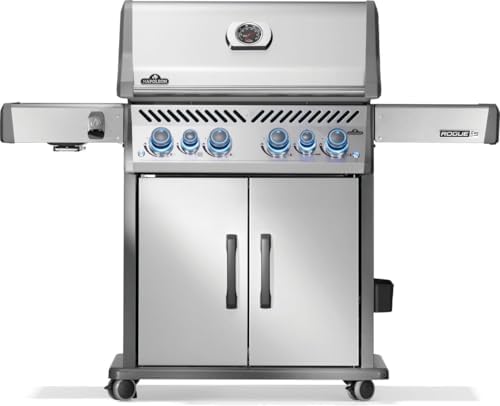
The Rogue PRO-S 525 is the top of the Rogue line. It's got the rear infrared rotisserie burner, the side burner, and all the upgrades from the PRO model. It runs about ~$950. That's getting into Prestige territory.
The rear rotisserie burner is the standout feature. I cooked a whole chicken on it, and the skin came out crispy and golden, with the meat staying juicy. That's hard to do on a standard gas grill. If you cook whole birds or roasts regularly, this is worth the money.
But here's the thing. At ~$950, you're getting close to the Prestige 500 RSIB price point. And the Prestige has a bigger cooking surface and a more substantial build. If you're spending that much money, I'd rather see you jump to the Prestige.
Napoleon Prestige 500 RSIB Propane Gas Grill
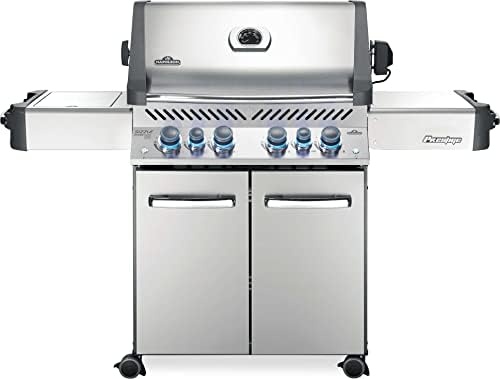
The Prestige 500 RSIB is the flagship Napoleon gas grill. It runs about ~$1,200. The cooking surface is 500 square inches, and you're getting four main burners, a rear infrared rotisserie burner, and a side burner. The build quality is a step up from the Rogue line. The grates are thicker, the lid is heavier, and the overall feel is more substantial.
The rear rotisserie burner is genuinely useful. I cooked a whole chicken on it, and the skin came out crispy and golden while the meat stayed juicy. The side burner is also useful, though I don't use it much. The main burners produce even heat across the entire cooking surface. My burger test showed less than a 20°F spread from left to right.
The infrared sear burner is the same as the one on the Rogue, which is to say it's excellent. I seared a ribeye on it and got a crust that looked like it came off a commercial flattop. The infrared burner is the reason to buy a Napoleon, and the Prestige does it just as well as the cheaper Rogue.
Is it worth ~$1,200? If you cook for a crowd regularly, yes. The bigger cooking surface and the rear rotisserie burner give you more flexibility. If you're mostly doing burgers and chicken for the family, the Rogue 525 is the better value. But if you want the best Napoleon has to offer, this is it.
Napoleon Prestige 500 RSIB Natural Gas Grill
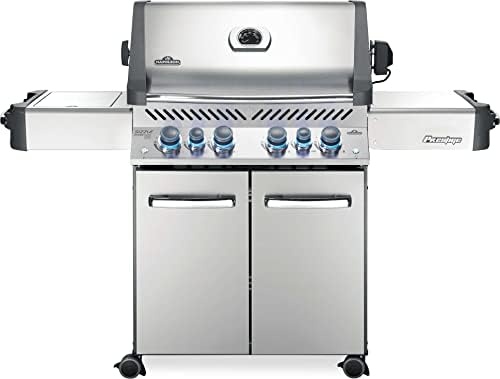
The natural gas version of the Prestige 500 RSIB runs about the same as the propane model. The difference is the fuel source. If you have a natural gas line on your deck, this is the way to go. You never have to worry about running out of propane mid-cook.
The performance is identical to the propane model. The infrared sear burner gets hot fast, the main burners are even, and the rotisserie burner works great. The only downside is the installation. You need a professional to hook up the gas line, which adds to the cost. But if you're planning to stay in your house for a while, it's worth it.
Napoleon Built-In 500 Series 32-Inch Built-In Gas Barbecue Grill Head
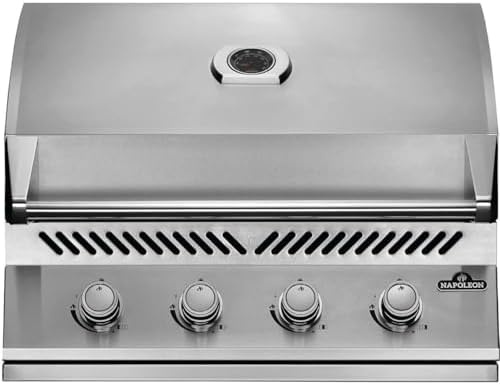
The Built-In 500 Series is a different beast. It's a 32-inch grill head designed to be installed into an outdoor kitchen island. It runs about ~$1,100 for just the head. You need to build the surrounding structure yourself, which adds to the cost.
The performance is solid. Four main burners, even heat, and the same infrared sear burner you get on the freestanding models. The build quality is excellent, with a welded firebox and thick stainless steel grates.
But here's the thing. A built-in grill is a permanent commitment. You can't move it, you can't take it with you if you sell your house, and you're depending on the installation being done right. If you're building an outdoor kitchen anyway, this is a great option. If you're just looking for a grill to cook on, get a freestanding model.
Should you buy it?
If you want a gas grill that can actually sear a steak, the Napoleon Rogue 525 is the best value in the $400-$700 range. The infrared sear burner is the real deal, and the build quality will hold up for years. If you want the rear rotisserie burner and the bigger cooking surface, the Prestige 500 RSIB is worth the jump to ~$1,200.
But if you're on a budget, the Char-Broil Performance at ~$250 will do the job. It'll rust out in three years, but it'll get you through. The Napoleon is a better investment. Do the math on cost-per-year. A ~$250 Char-Broil that lasts three years costs you ~$83 a year. A ~$700 Napoleon that lasts ten years costs you ~$70 a year. The Napoleon is cheaper in the long run, and it cooks better.
I'm still testing the Rogue 525. I've got a pork shoulder going on it this weekend, and I'm tracking how it handles a low-and-slow cook. I'll update this review if anything changes. So far, the Napoleon is living up to the hype.