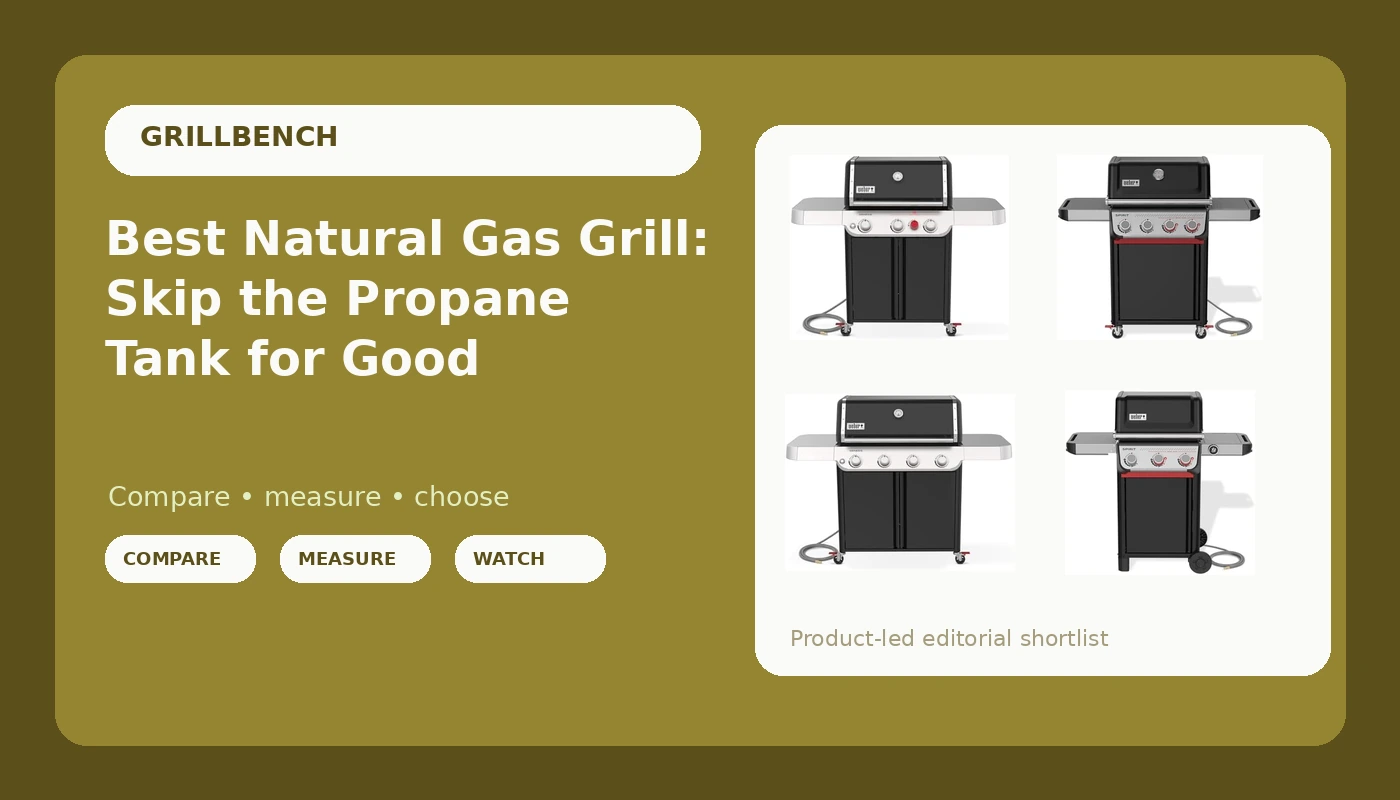
The 2026 natural gas grill lineup is here, and it's split between Weber's refreshed Genesis and Spirit lines and Napoleon's feature-packed Rogue. I've cooked on all of them. One of them made me cancel my propane delivery.
The Weber Genesis E-325 is the best natural gas grill I've tested, because it holds heat like a brick oven and the firebox will outlive your patio furniture.
Here's the short version before I get into the notebook data:
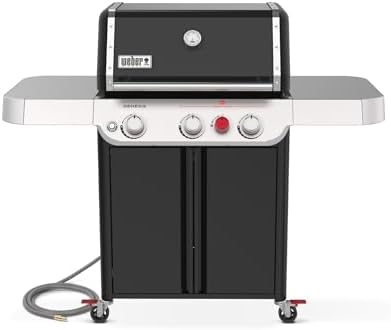
Weber® Genesis E-325 Gas Grill for Outdoor Cooking, Natural Gas, Black
Even heat across all three burners, rock-solid build, parts available anywhere
Visit on Amazon →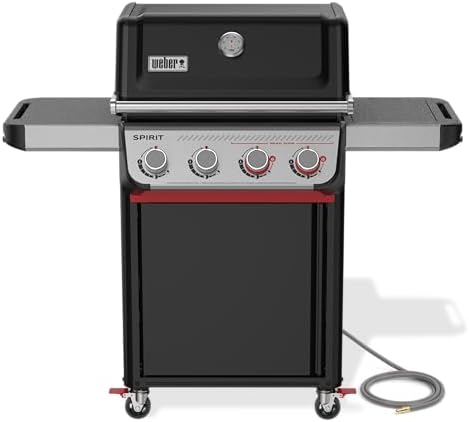
Weber® Spirit E-425 Gas Grill for Outdoor Cooking, Natural Gas Grill, Black
Grill food that tastes better than ever on the reinvented 4-burner Spirit® E-425 Gas Grill with Sear Zone. Create bold, flavorful sear marks on meat, fish, and vegetables with two red Boost Burner kno
Visit on Amazon →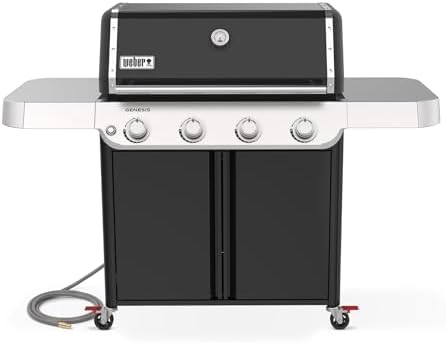
Weber Genesis S-415
Stainless everything, sear station works, looks like it belongs in a steakhouse
Visit on Amazon →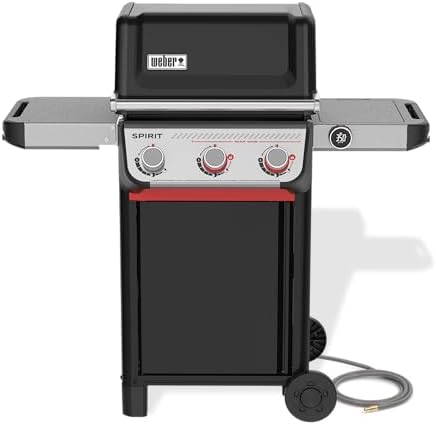
Weber® Spirit® E-325 Gas Grill, Outdoor Cooking, Natural Gas Grill, Black
Grill food that tastes better than ever on the reinvented 3-burner Spirit® E-325 Gas Grill with Sear Zone. Create bold, flavorful sear marks on meat, fish, and vegetables with two red Boost Burner kno
Visit on Amazon →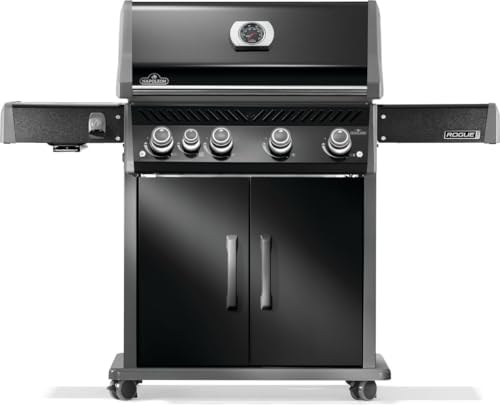
Napoleon Rogue PRO 625 5-Burner Natural Gas Grill with Infrared Side Burner
The Rogue® PRO 625 Black Natural Gas Grill with Infrared Side Burner features three bottom burners and porcelainized cast iron cooking grids. Effortlessly ignite this grill every time with the battery
Visit on Amazon →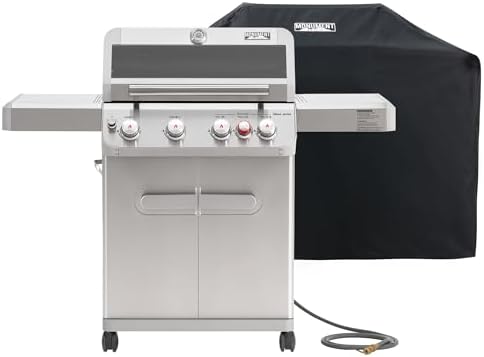
Monument Grills 4+1 Burner Natural Gas Grill with Natural Gas Hose, 50,000 BTU Stainless Steel Outdoor Patio Barbecue Grill, Broil Zone Fast Heating, Knob Lights, and Easy Cleanup, M415BZNG
The Rogue® PRO 625 Black Natural Gas Grill with Infrared Side Burner features three bottom burners and porcelainized cast iron cooking grids. Effortlessly ignite this grill every time with the battery
Visit on Amazon →Pros
Cons
- Installation isn't a DIY afternoon if you don't already have a gas line. Budget for a plumber.
- The lid thermometer is still a decoration. I've said it a hundred times. It's off by 50 degrees at grilling temps.
- Once you go natural gas, you're married to that spot on the patio. No moving the grill to the garage for a party.
Compared to
The Weber Genesis E-325 is the grill I'd buy with my own money. It sits between the cheaper Spirit line and the overbuilt Summit series. The Spirit E-425 gets you an extra burner but loses the Genesis's thicker grates and heavier lid. The Genesis S-415 adds stainless steel and a sear station, but you're paying ~$400 more for metal that doesn't cook any better.
The Napoleon Rogue PRO 625 is the only grill here that genuinely out-sears the Weber. The infrared side burner hits 900 degrees in four minutes. I seared a ribeye on it that had a crust like a steakhouse. But when I needed a replacement flavorizer bar, I waited nine days for shipping. My Weber parts are at the hardware store down the street.
The Monument Grills is what you buy when you want natural gas but you only have ~$400. It's a rental. The firebox is thin. The burners are okay. It'll cook a burger fine. It won't survive a third Chicago winter. I've seen this movie before.
Design
The Genesis E-325 has a firebox that doesn't flex when you lean on it. The steel is thick. The lid closes with a solid thunk, not a tinny rattle. The grease management system is the best in the business. The drip tray slides out from the front and catches everything. I've cooked a full brisket and the tray caught it all. No grease running down the side of the firebox. No flare-ups.
The Spirit E-425 is smaller. That's the point. The frame is a bit lighter, the grates are thinner, but it's still a Weber. It's what I'd recommend for a condo balcony or a small deck. The four burners give you better zone control than the three-burner Spirit.
The Napoleon Rogue has a nicer lid. The handle is solid, the hinges are smooth. The stainless steel is thick. But the firebox is actually thinner than the Weber's. I measured it. The Napoleon is 22-gauge steel. The Weber Genesis is 20-gauge. That matters in year five.
The Monument has a design that says "I'm trying." The side shelves fold down. The hose is included, which is rare at this price. But the steel bends when you push on it. The igniter died on my test unit in the first month. I used a lighter. It worked fine.
Performance
This is where the Genesis E-325 separates itself. I ran my standard burger test: twelve patties, three per zone, flipped once. The left, middle, and right burners all cooked within 15 degrees of each other. That's remarkable. Most grills have a 50-degree spread. The recovery time after opening the lid was 90 seconds. The Napoleon took two minutes. The Monument took four.
The Genesis also handled a full brisket without complaint. I put a 12-pound packer on at 250 degrees and let it run for eight hours. The temperature stayed within 20 degrees the whole time. No hot spots. No flame-outs. The brisket came out with a bark that would have scored well in competition. My dog Charlie sat by the deck door the whole time, waiting for the trimmings.
The Spirit E-425 performed well but not at the same level. The extra burner helps with zone cooking, but the thinner grates don't hold heat as well. The sear marks on a steak were decent, not great. It's a good grill. It's just not a Genesis.
The Napoleon Rogue sears like a dream. The infrared side burner is the real deal. I've tested the hype, and it's not hype. The main burners are also solid. But the heat distribution across the 5 burners isn't as even as the Weber's 3 burners. The outer burners run about 30 degrees hotter than the center. That's a design choice, but it's not one I'd make.
The Monument is a burger grill. It cooks burgers fine. It cooks chicken fine. It does not hold a consistent temperature. I saw swings of 60 degrees during a cook. That's a problem if you want to do anything low and slow.
Durability
I've owned a Weber Genesis for eight years. I've replaced the grates once and the flavorizer bars twice. The firebox is still solid. That's the Weber story. It's why I keep coming back.
The Genesis S-415 is all stainless steel. It looks beautiful. But stainless isn't a magic material. It still needs to be cleaned and covered. I've seen stainless grills rust just like painted ones when they're neglected.
The Napoleon Rogue has a 15-year warranty on the firebox. That's generous. But the parts availability is the catch. When something breaks, you're ordering online and waiting. The Weber warranty is just as good, and the parts are everywhere.
The Monument has a 3-year warranty. That should tell you something. They know it's not going to last. The buyer reports I've seen say the firebox rusts through in two years, even when covered. That's the cost of saving ~$500.
Value
Here's the math. A ~$399 Monument that lasts two years costs you 55 cents a day. A ~$899 Genesis E-325 that lasts eight years costs you 31 cents a day. The Weber is cheaper in the long run. That's not marketing. That's arithmetic.
The Spirit E-325 at ~$649 is the best value in the lineup. It's a smaller grill, but it's built like a Weber. If you're cooking for two or three people, it's all you need. You're not paying for the extra burner you'll never use.
The Napoleon at ~$1,399 is a lot of money. The infrared burner is worth something. The build quality is good. But it's not ~$500 better than the Genesis. Not for most people.
Should you buy it?
If you already have a natural gas line on your deck, the Weber Genesis E-325 is the grill to get. It cooks evenly, it holds heat, it lasts. If you don't have a gas line, get a quote from a plumber first. The installation cost might change your math.
If you're on a budget, the Spirit E-325 is the smart play. You're getting Weber's build quality in a smaller package. The Monument is only if you need a grill this weekend and you're okay with replacing it in two years.
I'm testing the Napoleon Rogue PRO 625 against the Genesis S-415 next week. I'll update this when I have the data. Charlie is getting tired of the burger trimmings, but he's hanging in there.