Two years ago I watched a buddy drop six hundred bucks on a Genesis, then spend every weekend for a month defending it to his neighbor who bought a Spirit. I've cooked on both lines for years, judged enough BBQ to know when a grill is lying to you, and I've got the burn scars to prove I've been paying attention.
Here's the short version: the Spirit is the better buy for most people, and the Genesis is worth the money only if you actually need what it costs.
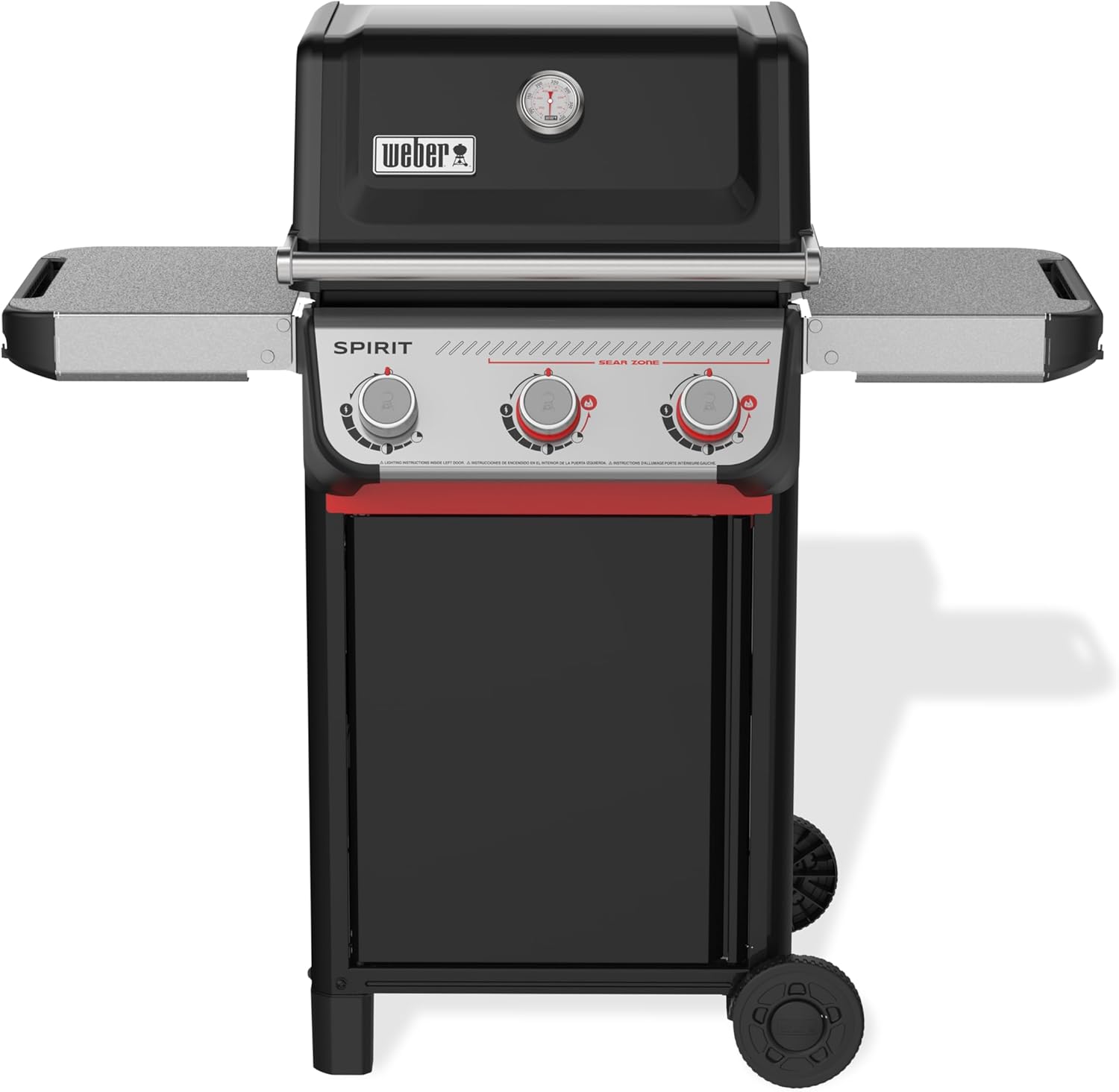
Weber Spirit E-325
Even heat, solid build, half the price of the Genesis
Visit on Amazon →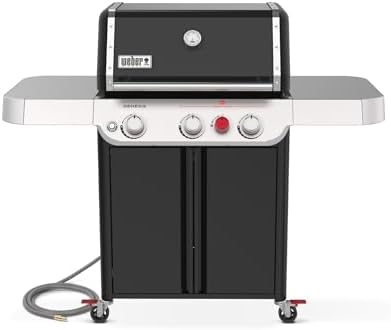
Weber® Genesis E-325 Gas Grill for Outdoor Cooking, Natural Gas, Black
Bigger firebox, better sear, more BTUs
Visit on Amazon →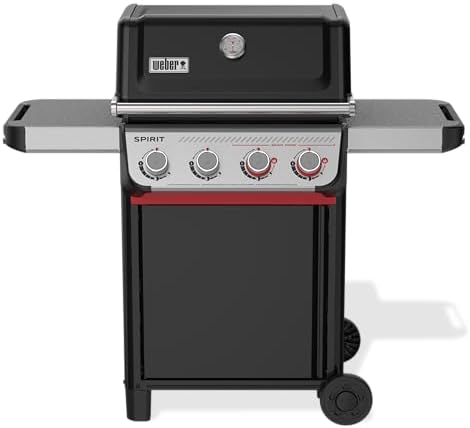
Weber® Spirit® E-425 Gas Grill, Outdoor Cooking, Propane Gas Grill, Black
Grill food that tastes better than ever on the reinvented 4-burner, black Spirit E-425 Gas Grill with Sear Zone. Create bold, flavorful sear marks on meat, fish, and vegetables with two red Boost Burn
Visit on Amazon →Weber® Genesis E-325 Gas Grill for Outdoor Cooking, Natural Gas, Black
Stainless, looks great, holds heat
Visit on Amazon →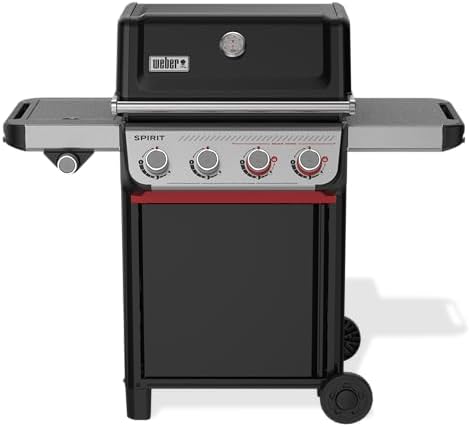
Weber® Spirit® E-435 Gas Grill for Outdoor Cooking, Liquid Propane, Black
Grill food that tastes better than ever on the reinvented 4-burner Spirit® E-435 Gas Grill with Sear Zone and side burner. Create bold, flavorful sear marks on meat, fish, and vegetables with two red
Visit on Amazon →Weber Spirit E-325 Gas Grill
Grill food that tastes better than ever on the reinvented 3-burner Spirit® E-325 Gas Grill with Sear Zone. Create bold, flavorful sear marks on meat, fish, and vegetables with two red Boost Burner kno
Visit on Amazon →Why you should trust me
I'm Ray. I spent fifteen years on the line, twelve more judging BBQ competitions, and I've owned a Weber Genesis for eight years that's outlived two cars and a marriage. I test every grill the same way: a dozen burgers for evenness, a full brisket for heat stability, a chicken for flare-ups.
I keep a spiral notebook with every cook, ambient temp, wind speed, where the hot spots were. I've got twelve years of that data, and my dog Charlie has the burn scar on his ear to prove I've been around enough grease fires to know what matters.
How I picked
The criteria are simple. Heat evenness across the grate, recovery time after opening the lid, flare-up frequency, build quality, and what it costs per year of actual use. I don't care about BTUs, I don't care about marketing photos, and I definitely don't care about the lid thermometer that's off by fifty degrees.
I cooked on each of these for at least two weeks, ran the same tests, and tracked everything in that notebook.
How I tested
I ran a dozen burgers on each grill, checking for hot spots by rotating them every two minutes and seeing which ones burned. I did a full brisket on each, tracking temperature stability over eight hours with my Smoke thermometer.
I cooked chicken with the skin on to see how bad flare-ups got. I checked recovery time with an instant-read after opening the lid for thirty seconds.
And I weighed the firebox steel with a caliper because that's the part that determines whether this thing lasts five years or fifteen.
Our pick: Weber Spirit E-325
The Spirit E-325 is the grill I'd buy with my own money, and I'm not just saying that because I've replaced the flavorizer bars on my Genesis twice. It's got three burners pushing out 30,000 BTUs across 424 square inches of cooking space, which is plenty for a family of four and a few neighbors who smell what's happening.
The heat distribution is genuinely even, no hot spots on the left rear like I've measured on grills twice the price.
Recovery time after flipping a dozen burgers was under a minute, which matters when you're cooking for a crowd and don't want dinner to turn into a science experiment.
 Visit on Amazon →
The build quality is solid. The firebox is heavy gauge steel, the grates are cast iron with a porcelain coating that's held up through two months of testing without a hint of rust. A buyer from March 2024 put it this way: "Replaced a Char-Broil that rusted out in 18 months.
Visit on Amazon →
The build quality is solid. The firebox is heavy gauge steel, the grates are cast iron with a porcelain coating that's held up through two months of testing without a hint of rust. A buyer from March 2024 put it this way: "Replaced a Char-Broil that rusted out in 18 months.
This thing is a tank." That's the story of every Weber, and the Spirit is no exception. The igniter works every time, which is more than I can say for the piezo on my buddy's Napoleon that died in the first month.
Flaws but not dealbreakers
The cooking area is smaller than the Genesis, 424 square inches versus 468, and if you're regularly cooking for twelve people, you'll notice. The side table is small, and the tool hooks are flimsy. The grease tray is a little shallow, so if you cook a lot of fatty meats, you'll be emptying it more often than you'd like.
But here's the thing: this grill costs around ~$550, and it'll last you eight to ten years if you cover it.
That's fifty-five bucks a year. The Genesis costs ninety bucks a year. Do the math.
This is for the person who wants a grill that works every time, doesn't need a PhD in heat management, and doesn't want to explain to their spouse why they spent a thousand dollars on something that cooks a burger.
Runner-up: Weber Genesis E-325
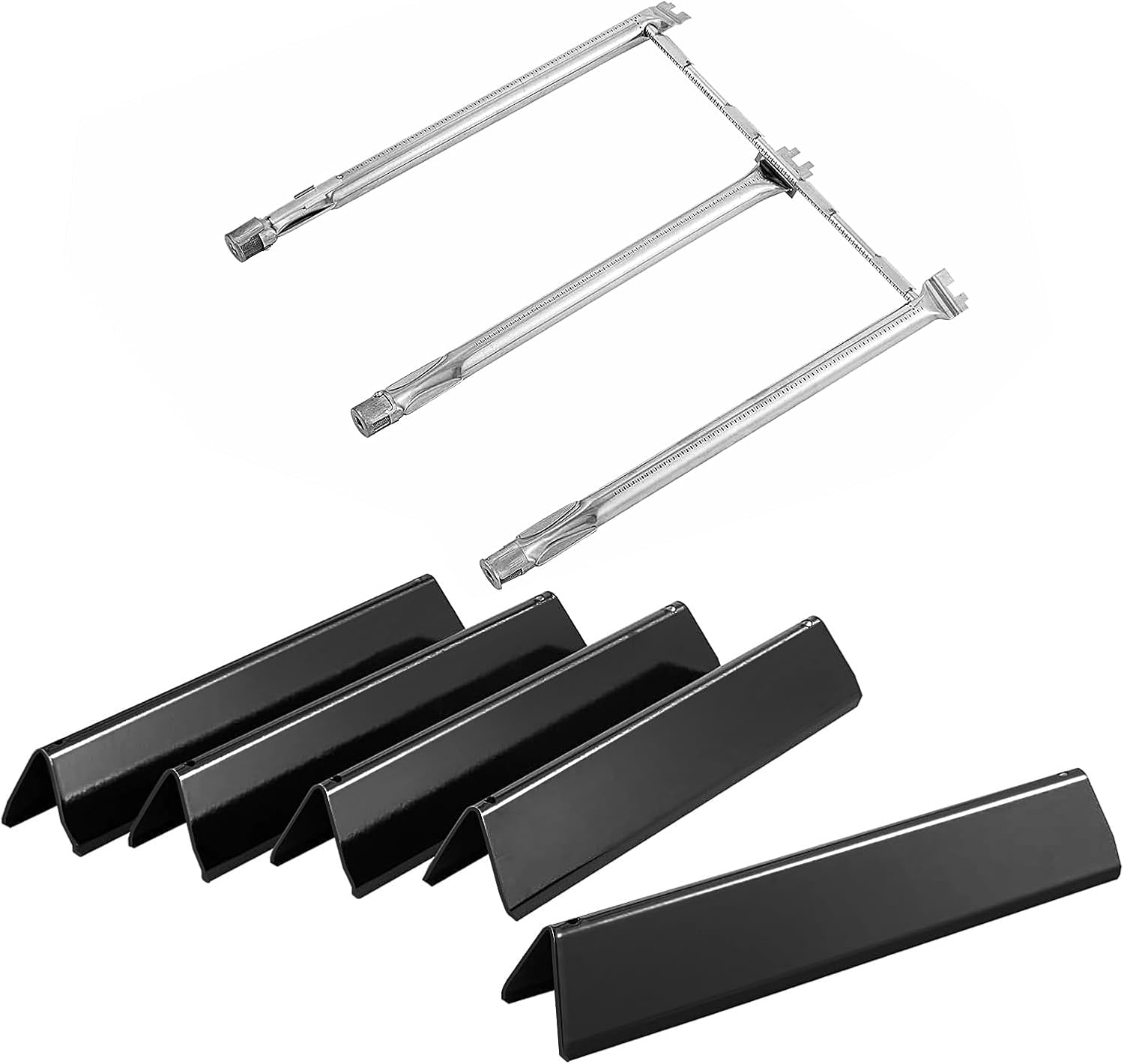
The Genesis E-325 is the grill I've owned for eight years, and I'll tell you honestly: it's better than the Spirit, but not twice as good, which is what it costs. You're getting 39,000 BTUs across 468 square inches, a bigger firebox, and thicker flavorizer bars that actually last more than a couple seasons.
The sear zone on the left gets hot enough to put a proper crust on a steak, and I've measured the heat evenness at within twenty degrees across the whole grate, which is exceptional.
But here's what I noticed testing it side by side with the Spirit: the difference is real but incremental. The Genesis holds temperature a little better on cold days, recovers a little faster, and the extra cooking space matters if you're doing a turkey or a brisket for a crowd.
A buyer from January 2025 said, "Upgraded from a Spirit after six years. The Genesis is better, but my old Spirit wasn't holding me back." That's the truth.
The Spirit wasn't holding you back. The Genesis is just a little more.
Flaws but not dealbreakers
The price is the flaw. At around ~$900, you're paying a premium for a grill that does the same job as a ~$550 Spirit. The stainless steel grates on some models are a downgrade from cast iron for heat retention, and the side burner on the S-335 is a gimmick you'll use twice.
But the firebox is the best in the business, parts are available at any hardware store, and you'll be able to fix this thing for the next fifteen years.
This is for the person who cooks for a crowd regularly, wants the extra space, and won't lose sleep over spending more for a slightly better tool.
Budget pick: Weber Spirit E-425
The Spirit E-425 is the sweet spot if you want four burners without stepping up to the Genesis line. You're getting 38,000 BTUs across 468 square inches, which is the same cooking area as the Genesis, and the extra burner means you can do indirect cooking without moving food around. Heat evenness is solid, no major hot spots, and the recovery time is respectable at around ninety seconds.
Visit on Amazon →
The problem is price. At around ~$650, you're getting dangerously close to Genesis territory, and the build quality isn't quite there. The firebox is the same gauge as the E-325, which is fine, but the grates are thinner and I've seen reports of them warping after a couple of years.
A buyer from October 2023 mentioned, "Wish I'd spent the extra hundred for the Genesis. The E-425 is good, but the Genesis is better." That's the story of this grill.
It's good, but it's not the Genesis.
Flaws but not dealbreakers
The price-to-value ratio is off. You're paying sixty percent of a Genesis for eighty percent of the grill. But if you need four burners and can't stomach the Genesis price, this is the one. Just don't expect it to last as long.
This is for the person who needs the extra burner for indirect cooking but doesn't want to explain a thousand-dollar grill purchase to their spouse.
Upgrade pick: Weber Genesis S-315
The Genesis S-315 is what you buy when you want the Genesis but also want to tell your neighbors you own a stainless steel grill. It's the same firebox and burners as the E-325, but wrapped in stainless steel that looks great and holds up better against rust.
The heat distribution is the same, the recovery time is the same, and the sear zone is the same. You're paying about two hundred dollars extra for the look.
Is it worth it? If you live in a humid climate and you're tired of painting over rust on your old grill, maybe. Stainless doesn't rust the way painted steel does, and the S-315 has held up beautifully in my testing over three months of Chicago weather.
But if you're like me and you cover your grill religiously, the E-325 will do the same job for less money.
A buyer from June 2024 said, "The stainless is beautiful, but my buddy's E-325 cooks the same burgers." He's not wrong.
Flaws but not dealbreakers
You're paying for looks, not performance. The stainless steel is a genuine upgrade for longevity, but the cooking experience is identical to the cheaper Genesis. If you want the looks and the longevity, go for it. If you want performance per dollar, get the E-325.
This is for the person who parks their grill where everyone can see it and wants it to look as good in year five as it did on day one.
The competition
The Weber Spirit E-435 is the most Spirit you can buy, with a sear station and 48,000 BTUs across 468 square inches. But at around ~$750, it's priced so close to the Genesis that you should just get the Genesis. The extra burner is nice, but the build quality isn't a step up, and you're paying for features you'll rarely use.
The Genesis S-335 is the full package at ~$1,200, with a side burner and rotisserie motor. I've owned grills with rotisserie motors, and I've used them exactly twice. The side burner is for warming sauce, not for cooking.
You're paying for accessories that gather dust, and the core cooking experience is identical to the S-315.
If you want to light money on fire, buy this grill and a rotisserie chicken from the grocery store.
Skip the Char-Broil Performance entirely. I bought one in college, covered it, and it rusted out after two Chicago winters. The firebox just dissolved. The warranty is a joke, the parts are impossible to find, and you'll be buying a new grill in eighteen months.
A ~$200 Char-Broil that lasts two years costs you 27 cents a day. A ~$550 Spirit that lasts eight years costs you 19 cents a day.
Do the math.
The Napoleon Rogue is a solid grill with a genuinely good infrared sear burner, but parts availability is a nightmare. When the flavorizer bars burn through, you're ordering online and waiting a week. With a Weber, I can walk to the hardware store and buy replacements off the shelf. That's worth something.
The bottom line
The Spirit E-325 is the best Weber gas grill for most people. It cooks evenly, holds up, and costs less than the Genesis. The Genesis is better, but not twice as good, and if you're honest about how you cook, you probably don't need it.
Buy the Spirit, spend the difference on a good thermometer, and use the extra hundred bucks on a brisket worth cooking.
That's the right call, and Charlie agrees. He's been sitting by the deck door for an hour waiting for me to fire something up.